The 10 July 2026, a fertilizer manufacturer in Morocco has planned a new cost of an NPK fertilizer granulation project of 300 000 USD. The objective was to produce NPK granules 15-15-15 from urea, of MAP/DAP, de KCl et de calcaire, with industrial capacity. According to customer requirements, YUSHUNXIN has designed a continuous granulation line using a rotating drum 10 TPH. This solution includes steam granulation, rapid humidity reduction and dust collection system to ensure quality NPK pellets. Here are the details of our exchange in this project.
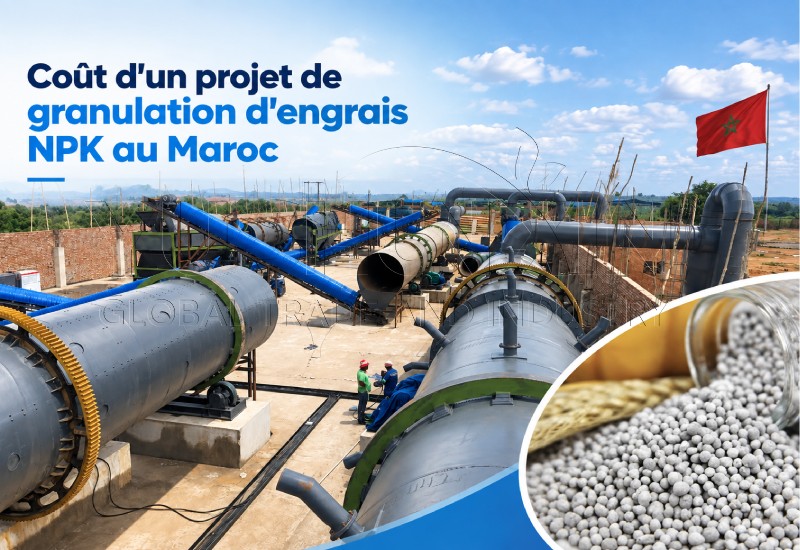
Project presentation
- Localisation : Maroc
- Ability : 10 TPH
- Cost : 303 600 USD
- Materials : urea, MAP/DAP, KCl et calcaire
- Solution : granulation tambour rotatif
The best solution for an NPK fertilizer granulation project cost of 300 000 USD
The cost of an NPK fertilizer granulation project depends on several factors, in particular the production capacity, la configuration des équipements, transportation and installation needs. For this project in Morocco, the client was looking for a continuous NPK pellet production system with an investment of 300 000 USD. In this case, granulation by rotating drum represents a suitable solution, because this technology is suitable for large capacity industrial production. What's more, the rubber coating of the drum improves wear resistance and ensures stable operation for long-term industrial use.
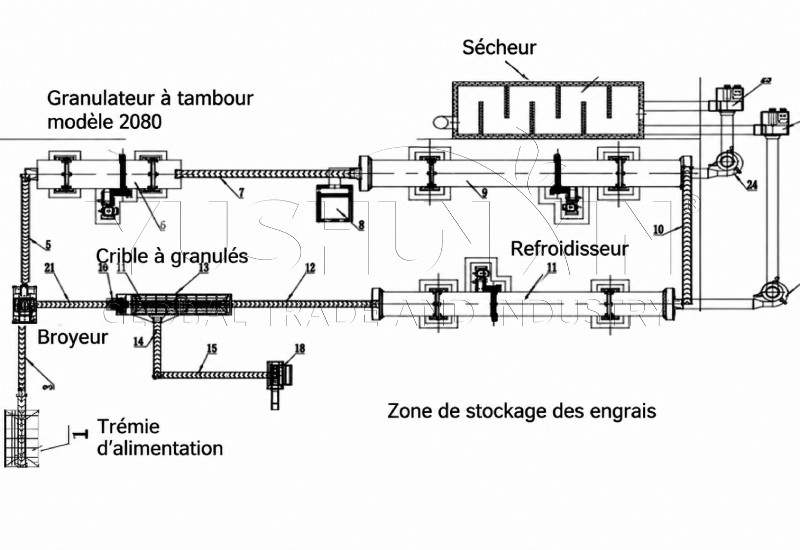
The main equipment configuration includes :
- Automatic raw material dosing system ;
- Fertilizer mixer for uniform homogenization ;
- Rotary drum granulator for continuous granule formation ;
- Drying and cooling system ;
- Screening system to control particle size ;
- Dust collection system for cleaner production.
The cost of an NPK fertilizer granulation project estimated for this rotary drum granulation line of 10 TPH is approximately 303 600 USD. This amount includes complete NPK fertilizer production equipment, international shipping and customs clearance fees.
Why choose a rotary drum granulation line for an NPK plant 10 TPH ?
For this Moroccan project of continuous production of fertilizers 10 TPH, the granulation par tambour rotatif is a practical choice for manufacturers seeking stable production and consistent pellet quality. This solution has three main advantages.
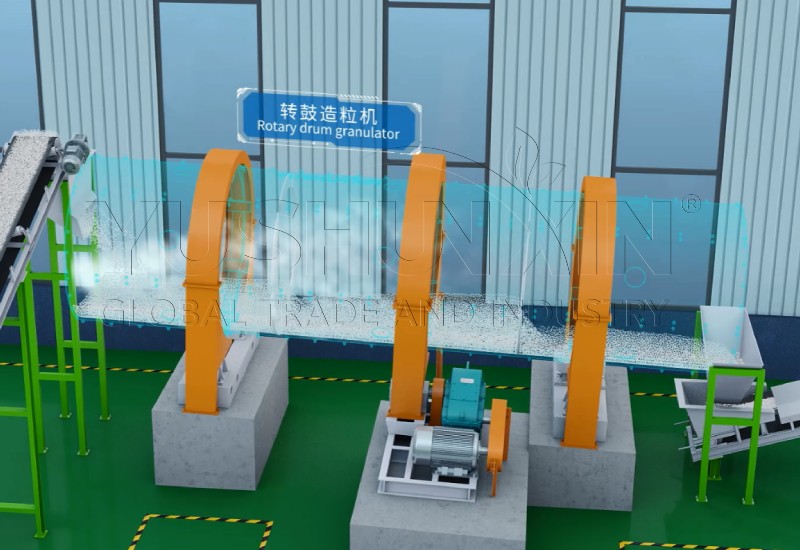
Steam granulation
Rotary drum granulation system uses steam granulation technology. This method significantly improves the NPK granulation process, because it increases the adhesion of materials and helps the particles form more resistant granules. What's more, unlike a simple addition of water, steam allows for faster and more uniform distribution of moisture during the granulation process.
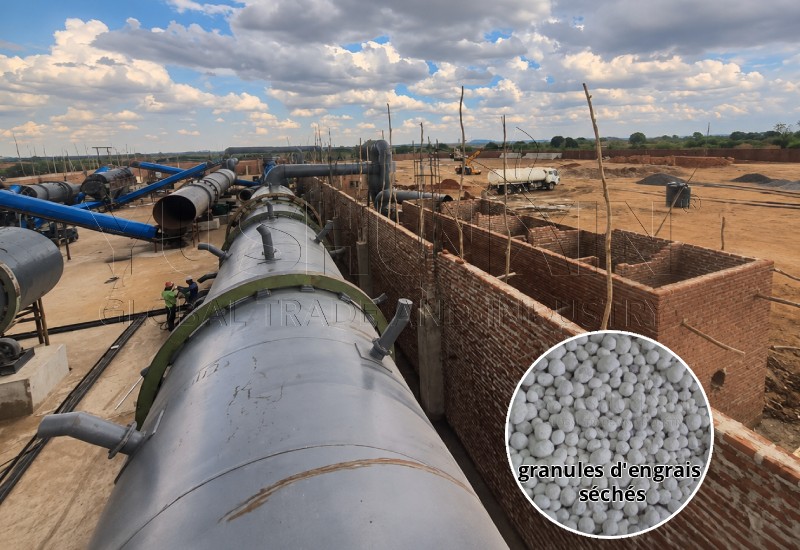
Rapid reduction of humidity up to 5 %
After NPK granulation, the drying system quickly reduces the moisture content to approximately 5 %. So, the pellets have better stability during storage and less caking problems during transport.
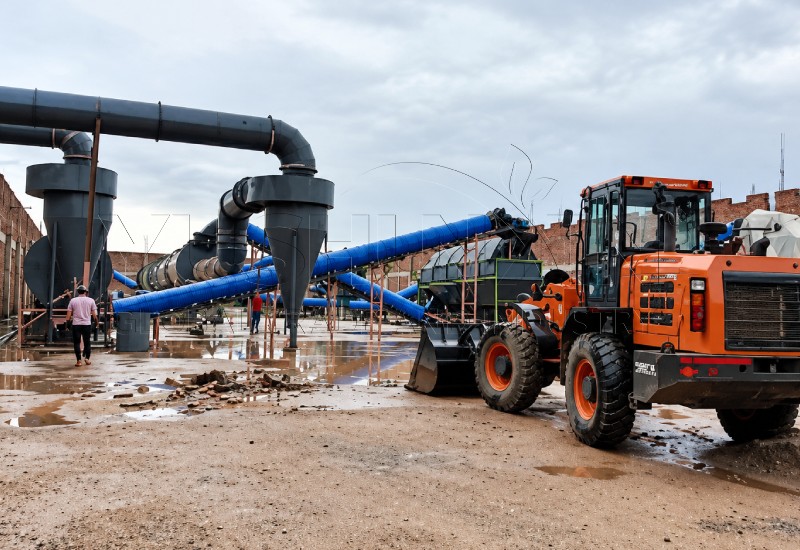
Dust collection and emissions reduction
Moreover, dust collection system captures fine particles generated during NPK pellet production. It therefore improves the working environment, while recovered materials can be returned to the production process to reduce losses.
Can this line produce NPK pellets 15-15-15 from urea, MAP/DAP, KCl et calcaire ?
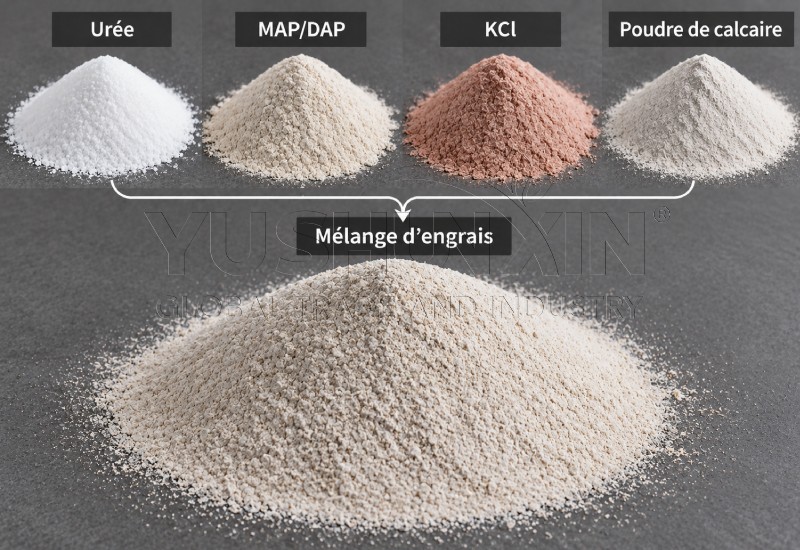
For this NPK project in Morocco, the investor wanted to produce NPK pellets 15-15-15 with the following raw materials :
– Urea as a source of nitrogen ;
– MAP/DAP as a source of phosphorus ;
– KCl as a source of potassium ;
– Limestone as filler and formulation adjustment.
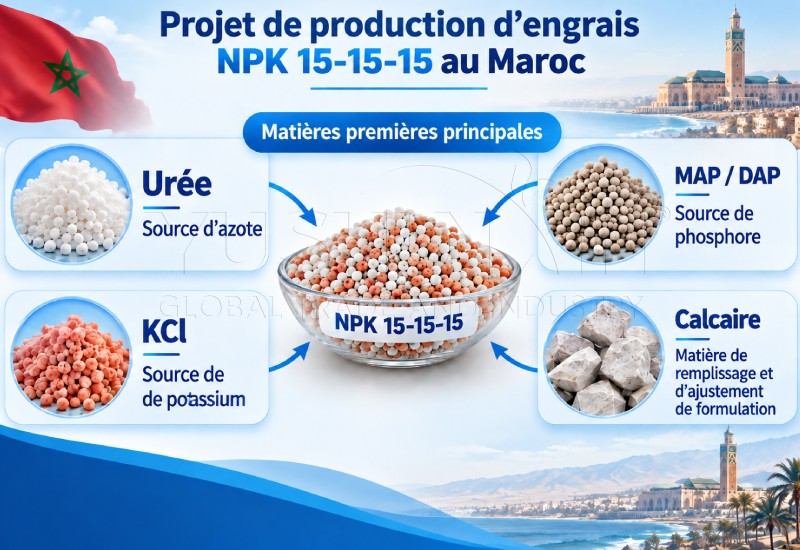
Is it possible ? Of course. YUSHUNXIN rotary drum granulation system has excellent adaptability to different raw materials. Furthermore, this solution makes it possible to prepare NPK granules with a precise proportion of 15-15-15.
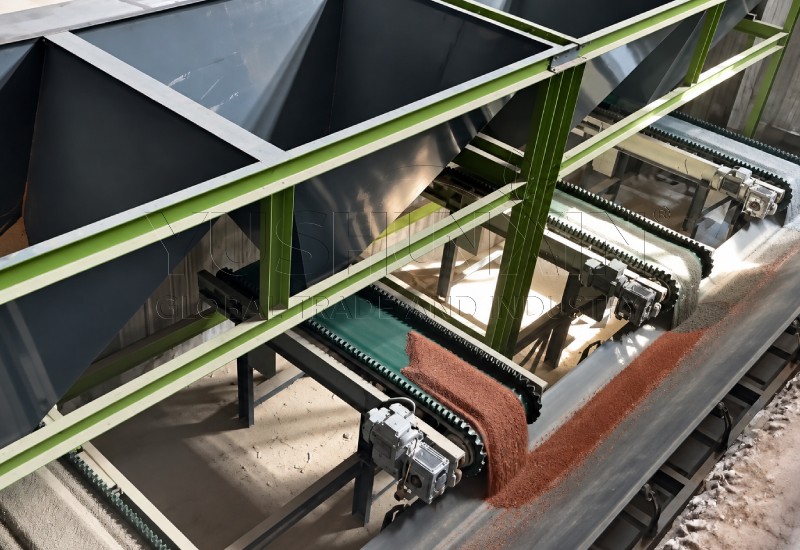
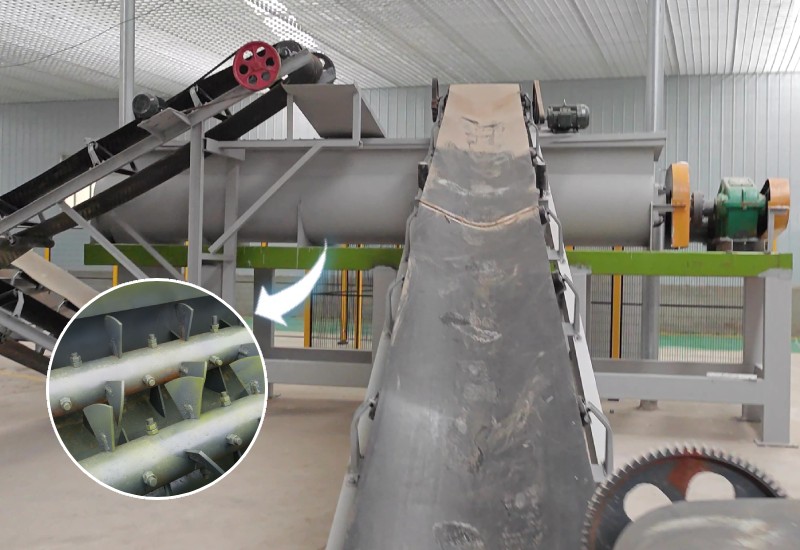
To ensure a balanced distribution of nitrogen, phosphorus and potassium in each NPK granule, the solution uses a dynamic dosing machine associated with a double shaft mixer.
The first adjusts the flow rate of each material thanks to its precise weighing system and its PID alarm. Ensuite, the mixer ensures uniform distribution of nutrients through continuous and homogeneous mixing.
How to control the pellet size between 3 et 6 mm during NPK granulation process ?
The final granule size represents an important factor in the industrial manufacturing of NPK compound fertilizers. In this rotary drum granulation project, you can produce NPK pellets from 3 has 6 mm by adjusting several process parameters :
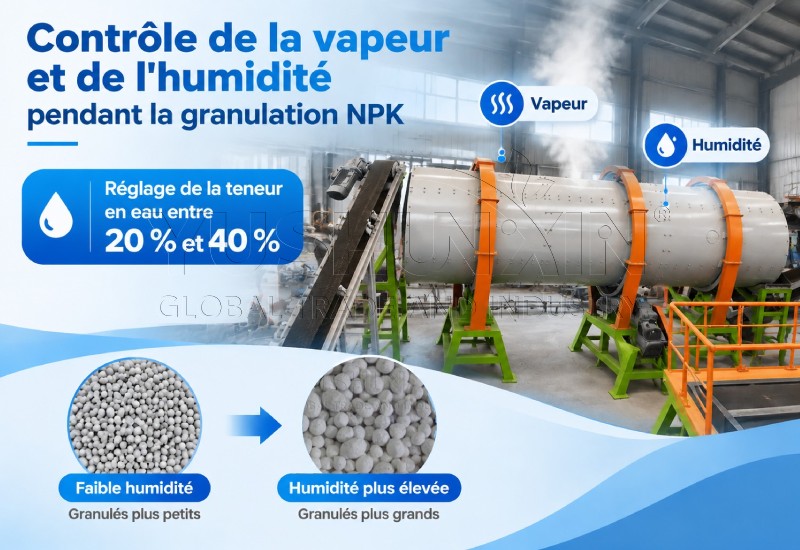
Steam and humidity control during NPK granulation
Setting the water content between 20 % et 40 % : higher humidity generally produces larger pellets, while lower humidity produces smaller pellets ;
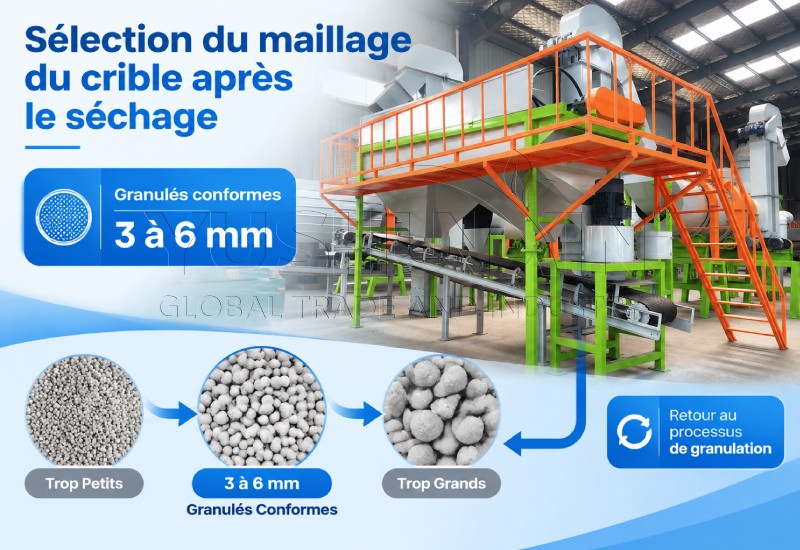
Screen mesh selection after drying
The screening system separates the conforming granules from 3 has 6 mm particles too large or too small. What's more, non-compliant materials return to the granulation process for further processing, which improves overall production efficiency.
The above information presents the details of our communication with the client regarding the cost of an NPK fertilizer granulation project of 300 000 USD have Morocco. In addition to this solution, YUSHUNXIN also offers complete solutions for a NPK granulation plan with an investment of 500 000 USD as well as an NPK pellet manufacturing solution with a budget of 100 000 USD. Contact us now to get your own business plan and a fertilizer production solution tailored to your project.



 +8618203993035
such.

 Get a quote
Investigation
 Click to return to top
high


